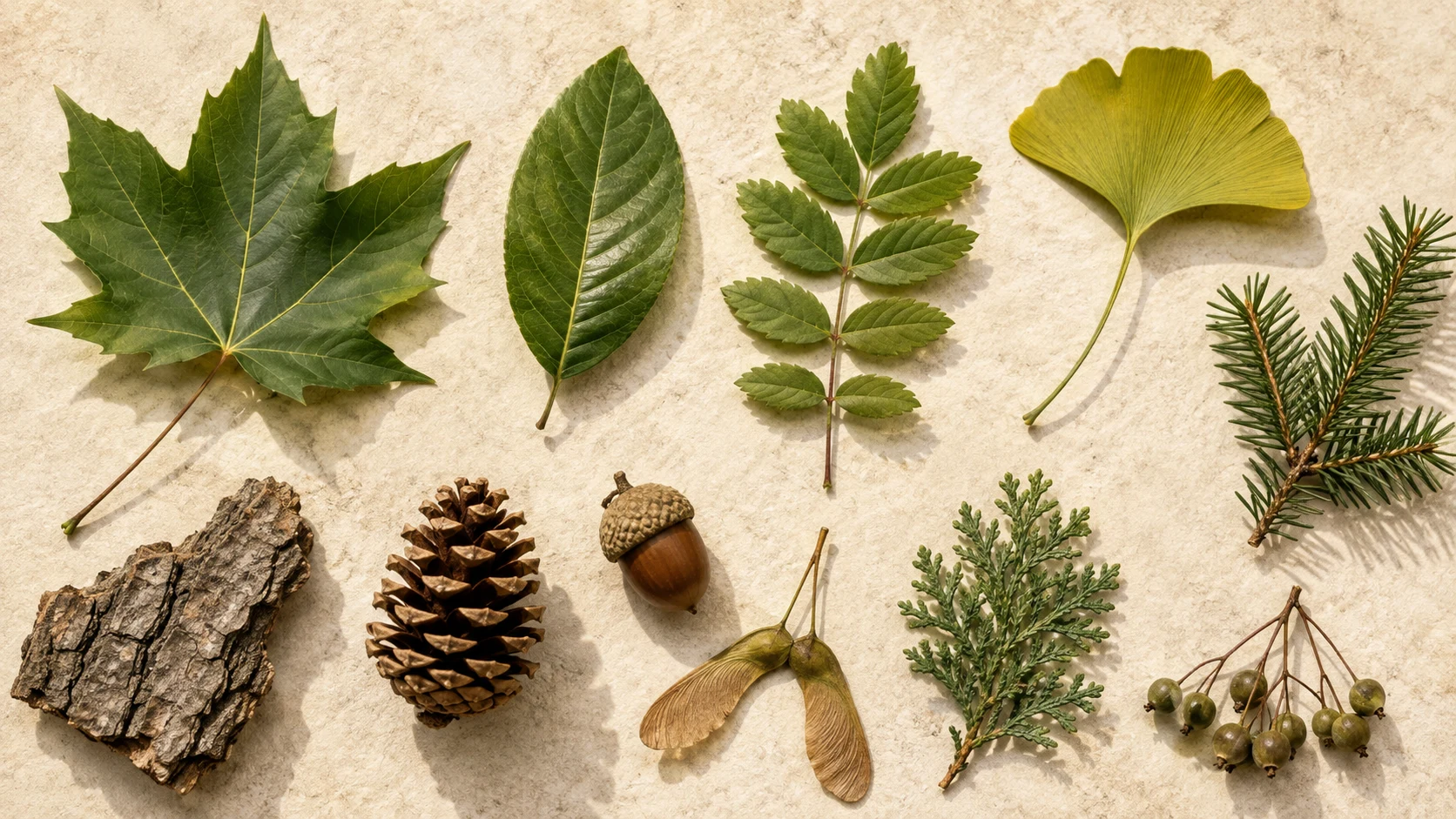
What is tree identification?
Tree identification is the process of determining the identity of a tree by examining characteristics such as its leaves, bark, buds, branches, flowers, fruit, cones and overall growth form.
Some trees are easy to recognize from one distinctive feature. Others are much more difficult because closely related species can have similar leaves or bark.
A leaf may narrow the possibilities, while bark, buds, fruit, cones, branching pattern and location can help confirm the identification.
How to identify a tree
Begin with the whole tree. Notice its size, shape and branching pattern, then move closer and examine the smaller botanical details.
Overall form
Look at height, crown shape, trunk form and branching pattern.
Leaves
Examine leaf shape, edge, veins, arrangement and whether leaves are simple or compound.
Bark
Look for smooth, peeling, scaly, ridged, furrowed or patterned bark.
Buds & twigs
Bud shape, twig color and opposite or alternate arrangement can be valuable clues.
Fruit & cones
Acorns, berries, pods, winged seeds and cones can strongly narrow an identification.
Location
Climate, habitat and geographic range help distinguish similar-looking species.
Identify trees by their leaves
Leaves are usually one of the first characteristics people notice when trying to identify a tree.
Start by asking whether the tree has broad leaves, needles or scale-like foliage. For broad-leaved trees, examine whether each leaf is simple or divided into multiple leaflets.
Useful leaf characteristics include:
- overall leaf shape
- smooth, serrated or lobed edges
- simple or compound leaves
- opposite, alternate or whorled arrangement
- vein pattern
- surface texture and hairs
- color and seasonal changes
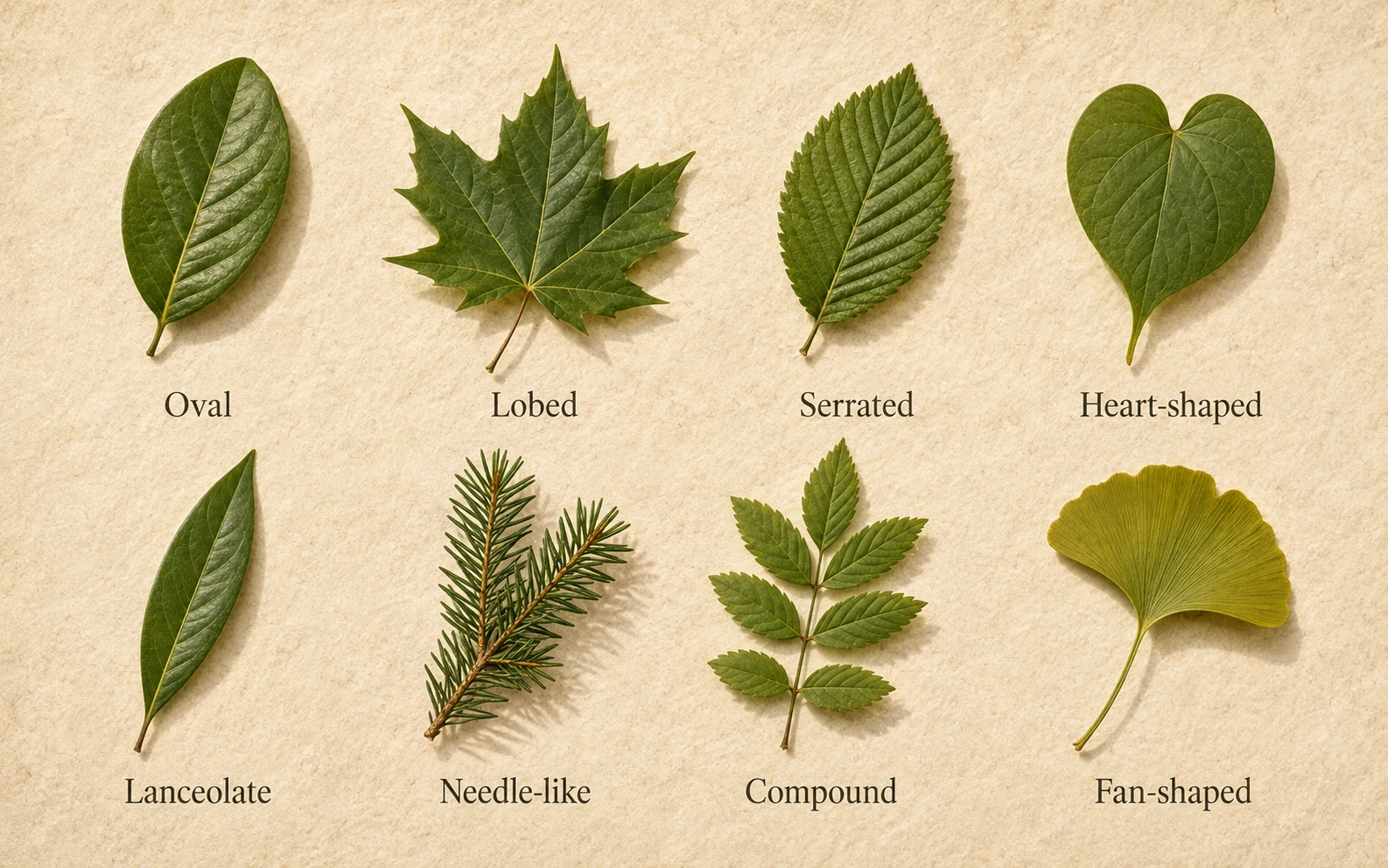
Leaf shape is useful, but leaf arrangement, margins and whether a leaf is simple or compound can be equally important.
Two leaves may look similar when separated from the tree. Seeing how they are arranged on a twig can provide an important additional clue.
Identify trees by bark
Bark becomes especially useful when leaves are absent or when several species have similar foliage.
Examine the bark's color, texture and pattern. Some trees have smooth bark, while others develop deep furrows, vertical ridges, plates, scales or peeling layers.
Bark can also change as a tree ages, so young branches and mature trunks may look quite different.
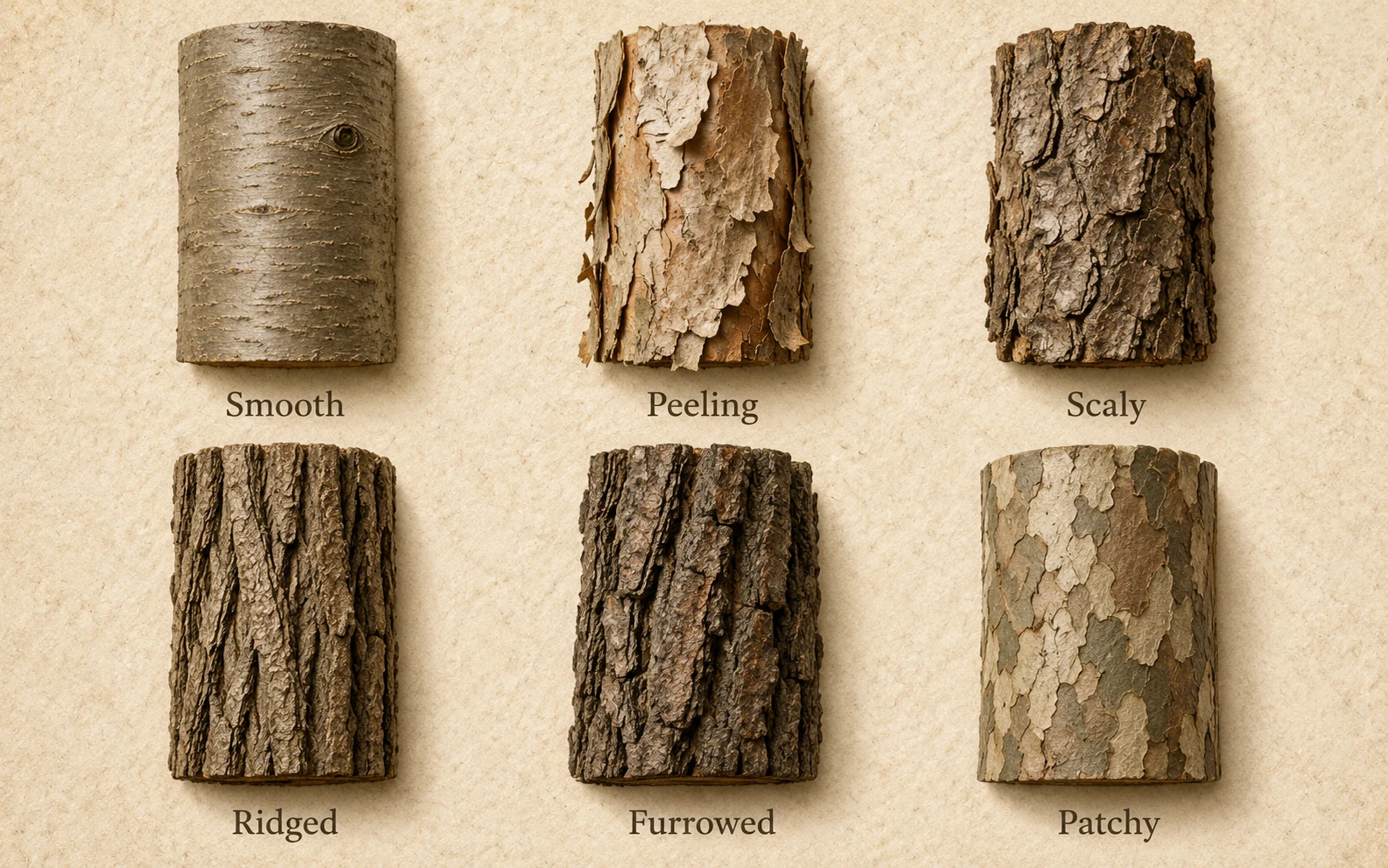
Smooth, peeling, plated, ridged and deeply furrowed bark can help distinguish tree species.
Buds, twigs and branches
During winter, buds and twigs can become some of the most useful identification features on deciduous trees.
Look at whether buds occur opposite each other or alternate along the twig. Notice their size, shape, color and whether they are covered by scales.
Twig thickness, color, surface texture and the presence of thorns or distinctive markings can also provide clues.
Fruit, seeds and cones
Reproductive structures can be among the most distinctive tree identification features.
Depending on the species, a tree may produce acorns, nuts, berries, fleshy fruits, pods, capsules, winged seeds or cones.
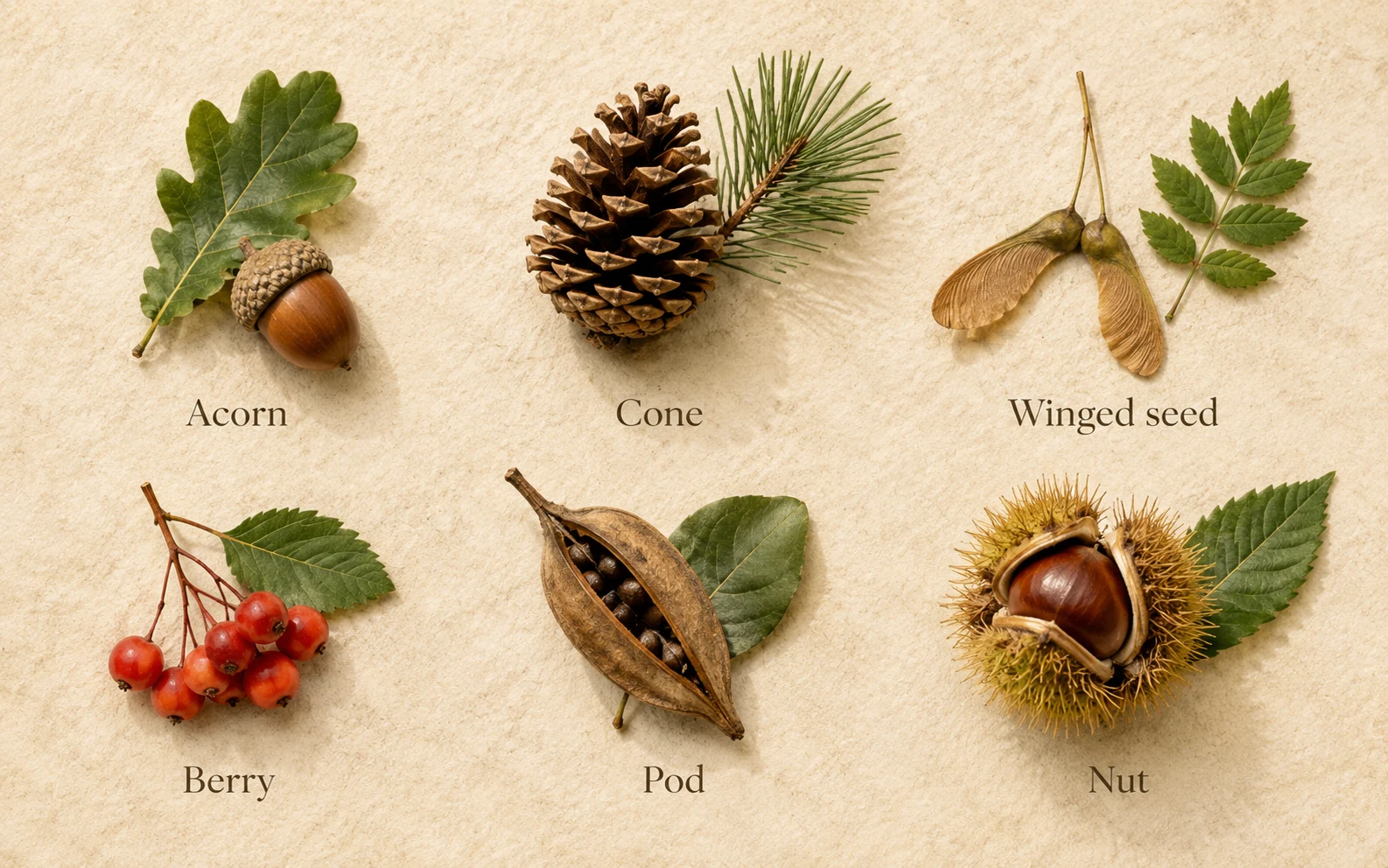
Fruit and seed structures often remain recognizable even when leaves of different species look similar.
Evergreen or deciduous?
One useful early distinction is whether a tree keeps its foliage throughout the year or loses its leaves seasonally.
Many deciduous trees have broad leaves and lose them during part of the year. Many conifers are evergreen and bear needles or scales, although there are important exceptions to both patterns.
For needle-bearing trees, notice how many needles grow together, their length and stiffness, and how they attach to the branch.
Scientific tree identification without a photo
Tree identification does not have to begin with a photograph. A scientific or botanical identification approach uses observable characteristics to narrow down possible species.
For trees, these characteristics can include leaf shape and arrangement, bark texture, buds, twigs, fruit, cones, branching pattern, growth form and habitat.
Character-based identification can be used on its own, and it can also help verify a result suggested from a photograph by comparing independent botanical features.
Identifying a tree from photos
A tree photograph can contain useful information, but a single distant image may not show enough detail for a confident identification.
When possible, capture several views of the same tree.
- the entire tree and crown
- a clear leaf or group of leaves
- how leaves attach to a twig
- a close-up of the bark
- buds or young twigs
- fruit, seeds or cones if present
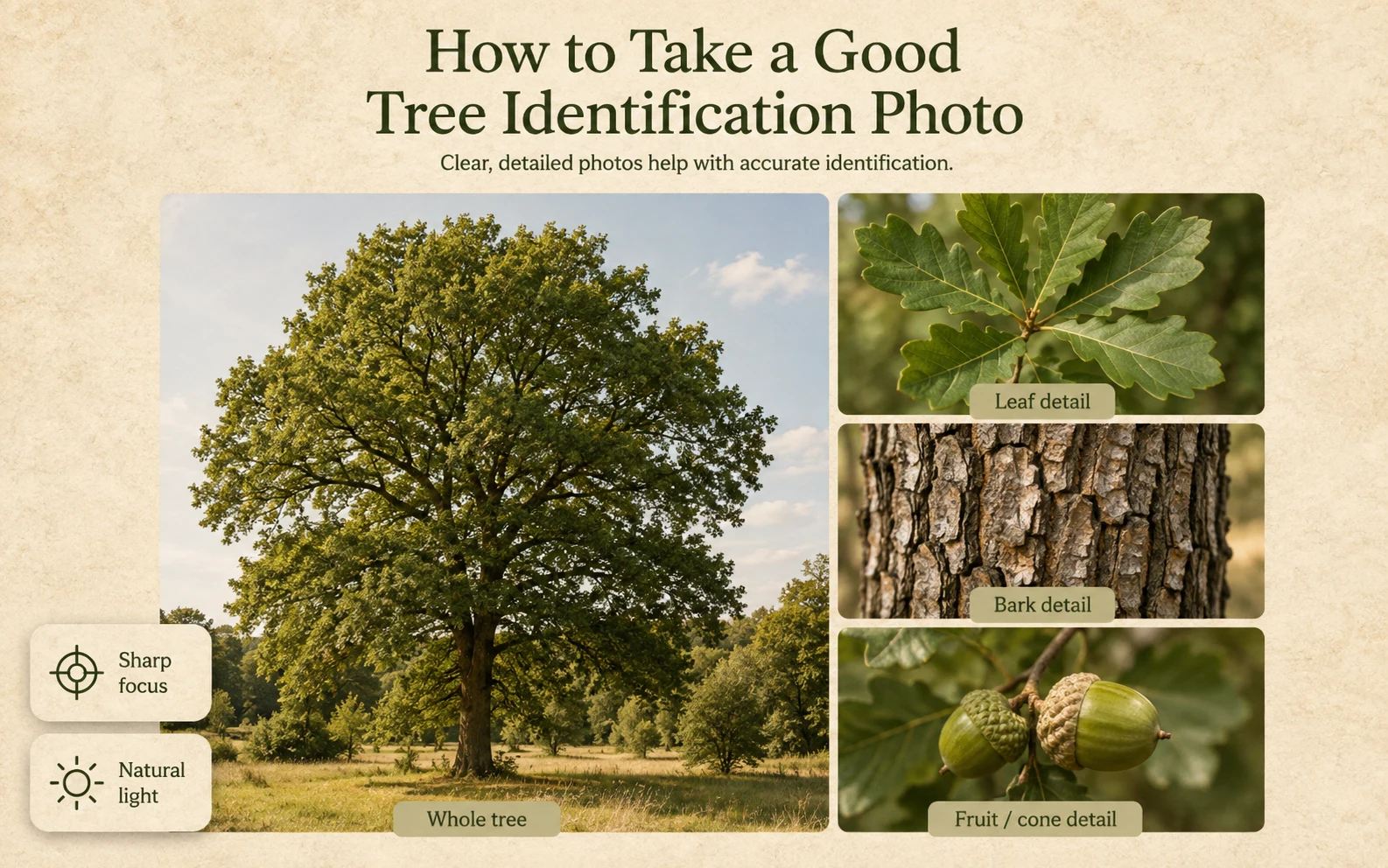
A whole-tree photograph shows growth form, while close-ups reveal features such as leaf arrangement, bark texture and buds.
Have a tree you want to identify?
Use NatureIn to identify trees from photos and explore information about the species you discover.
Identify with NatureInHow to identify trees in winter
Deciduous trees can still be identified after their leaves have fallen. Winter identification relies more heavily on bark, buds, twigs, branching pattern and any remaining fruit or seed structures.
Fallen leaves beneath the tree may offer another clue, although you should make sure the leaf actually came from the tree you are examining.
Use habitat and location as clues
The same visual feature can occur in unrelated trees, so knowing where a tree is growing can help narrow the possibilities.
Consider climate, elevation, soil moisture and whether the tree appears to be growing naturally or was planted in a garden, park or street.
Geographic range is particularly helpful when comparing closely related species from different parts of the world.
Why can tree identification be difficult?
Tree characteristics change with age, season and growing conditions. Young bark may differ from mature bark, leaves can vary in size and shape, and fruit may be present for only part of the year.
Closely related species and cultivated varieties can also look very similar. For difficult trees, it is useful to compare several independent characteristics rather than relying on one photograph or one leaf.
Tree identification and safety
Do not eat leaves, fruit, seeds, bark or other parts of an unknown tree based only on a photo identification.
Some trees contain toxic or irritating compounds, and edible-looking fruits or seeds may have dangerous look-alikes.
For decisions involving food, medicine, poisoning, agriculture or safety, confirm the identification with an appropriate expert or authoritative botanical source.
Tree identification FAQ
What is the easiest way to identify a tree?
Start with the leaves and overall form, then check bark, buds, fruit, cones and location. Using several features together is more reliable than using only one characteristic.
Can you identify a tree from a leaf?
Sometimes. Distinctive leaves can strongly narrow an identification, but similar species may require additional clues such as bark, buds, fruit or geographic location.
How do you identify a tree without leaves?
Examine bark, buds, twigs, branch arrangement, overall form and any remaining fruit, seeds or cones. These features are especially useful in winter.
Is bark useful for tree identification?
Yes. Bark color, texture, peeling pattern, ridges, furrows and plates can provide important clues, especially on mature trees.
Can an app identify a tree from a picture?
Tree identification apps can analyze photographs and suggest possible species. Clear photos of leaves, bark, fruit and the whole tree can provide more useful information than one distant image.
Why do leaves from the same tree sometimes look different?
Leaf appearance can vary with age, sunlight, position on the tree, season and growing conditions. Natural variation can also occur within a species.