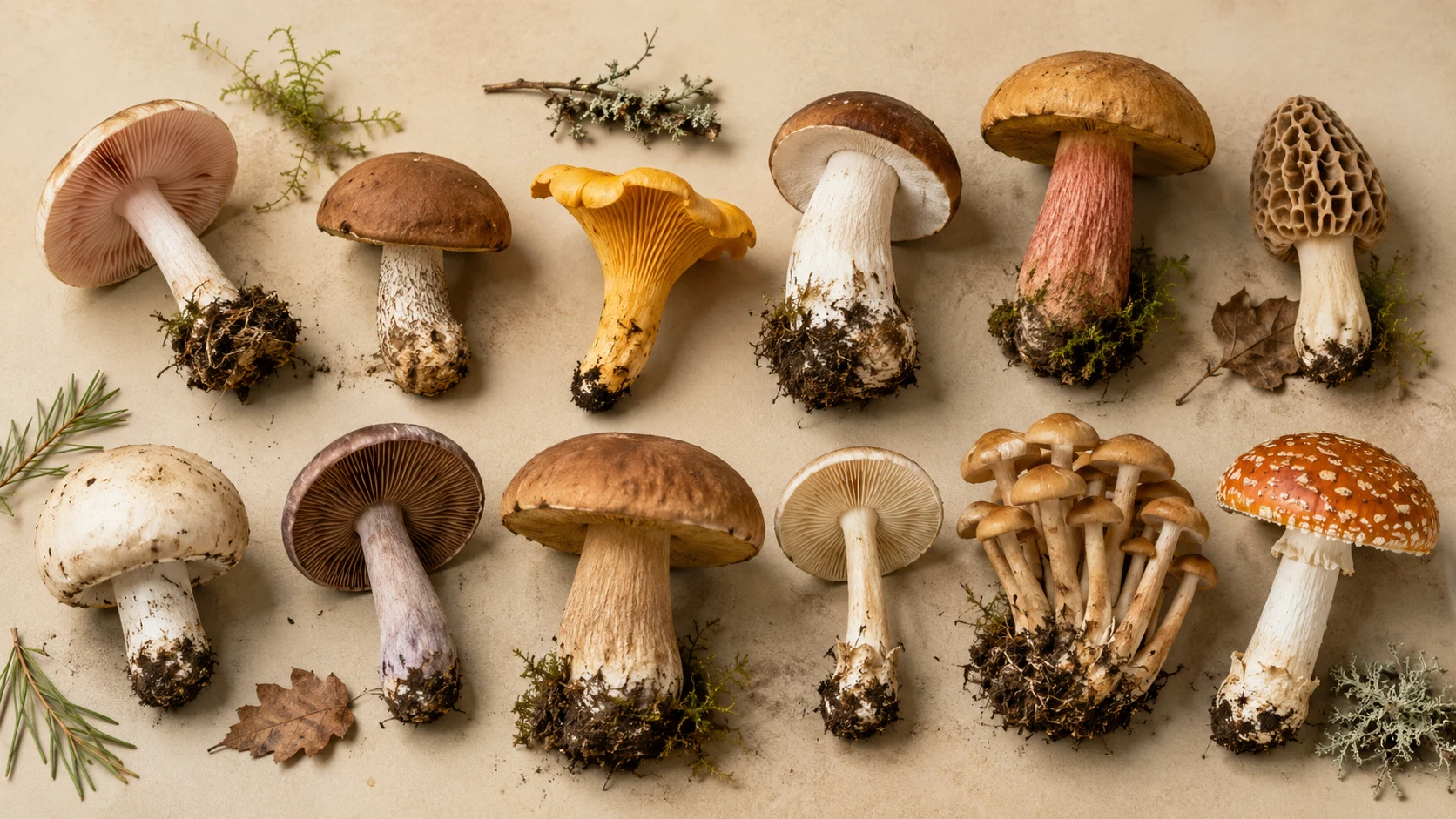
What is mushroom identification?
Mushroom identification is the process of comparing the visible characteristics of a mushroom with known species or groups. Useful features can include the cap, underside, stem, ring, base, color, texture, bruising reactions, growth pattern and habitat.
Unlike many plants, mushrooms can change appearance quickly as they mature. Weather, age and damage can also alter color, texture and shape.
A top view of the cap may look distinctive, but the underside, stem and base can contain equally important identification clues.
How to identify a mushroom
Begin with the whole mushroom and its surroundings, then examine individual structures carefully. Try to record several features before comparing possible identifications.
Cap
Look at cap shape, color, texture, surface markings and how the margin changes with age.
Underside
Check whether the underside has gills, pores, teeth or another spore-bearing surface.
Stem
Examine stem thickness, color, texture, shape, rings and other markings.
Base
The base may be swollen, tapered, rooted or surrounded by distinctive tissue.
Growth pattern
Notice whether mushrooms grow singly, in groups, clusters, rings or directly from wood.
Habitat
Forest type, nearby trees, soil, dead wood, grass and geographic location can all provide useful clues.
Examine the cap
Cap shape can change as a mushroom matures, but it is still a useful starting point. Caps may be convex, flat, bell-shaped, funnel-shaped, conical or irregular.
Also look at whether the surface is smooth, dry, sticky, scaly, cracked, fibrous or covered with patches or warts.
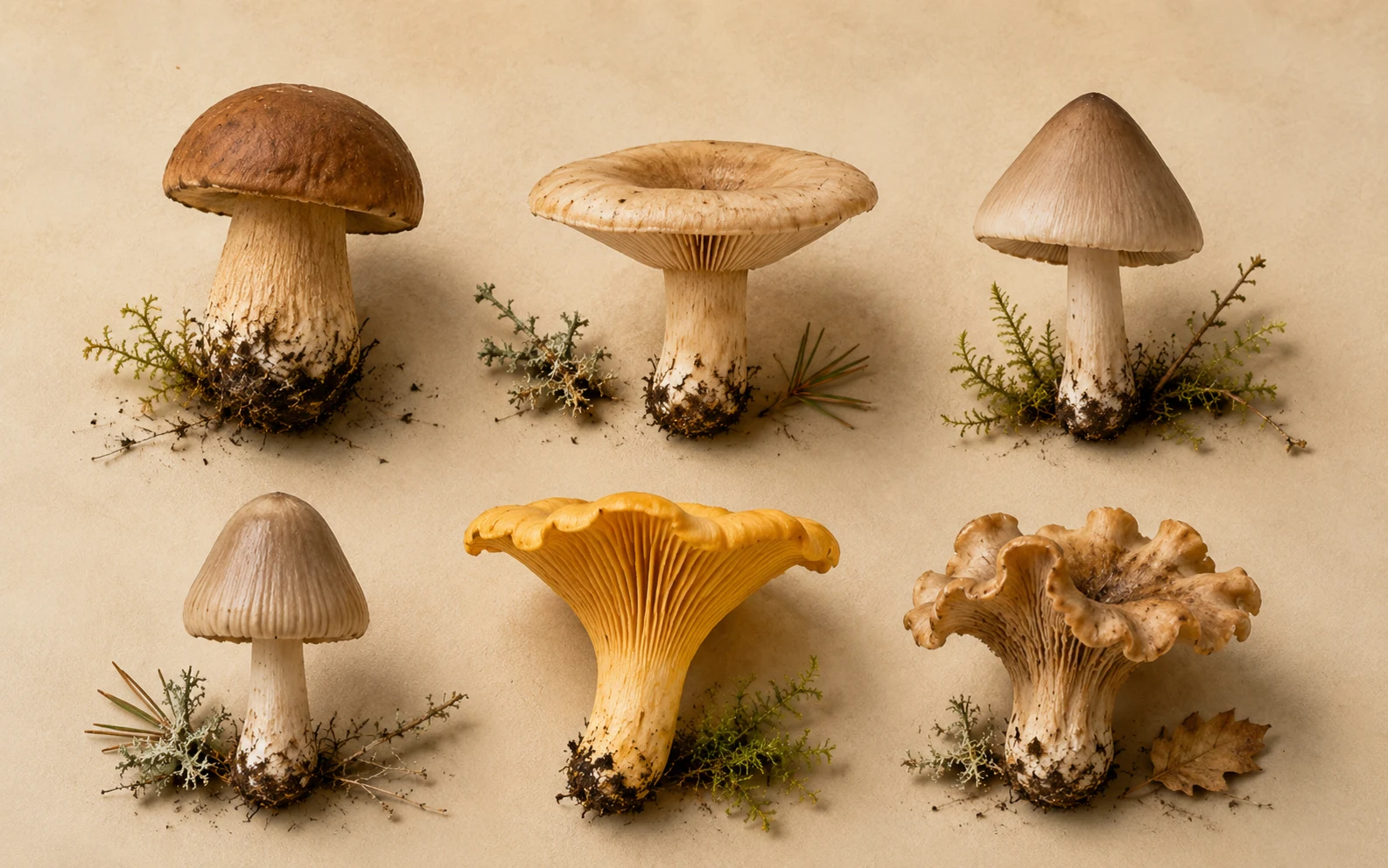
Cap shape and texture are useful clues, but they should be compared with underside, stem and habitat features.
Look under the cap
The underside of a mushroom can be one of its most important identification areas.
Some mushrooms have gills, while others have pores, teeth or ridges. If gills are present, notice their color, spacing and how they connect to the stem.
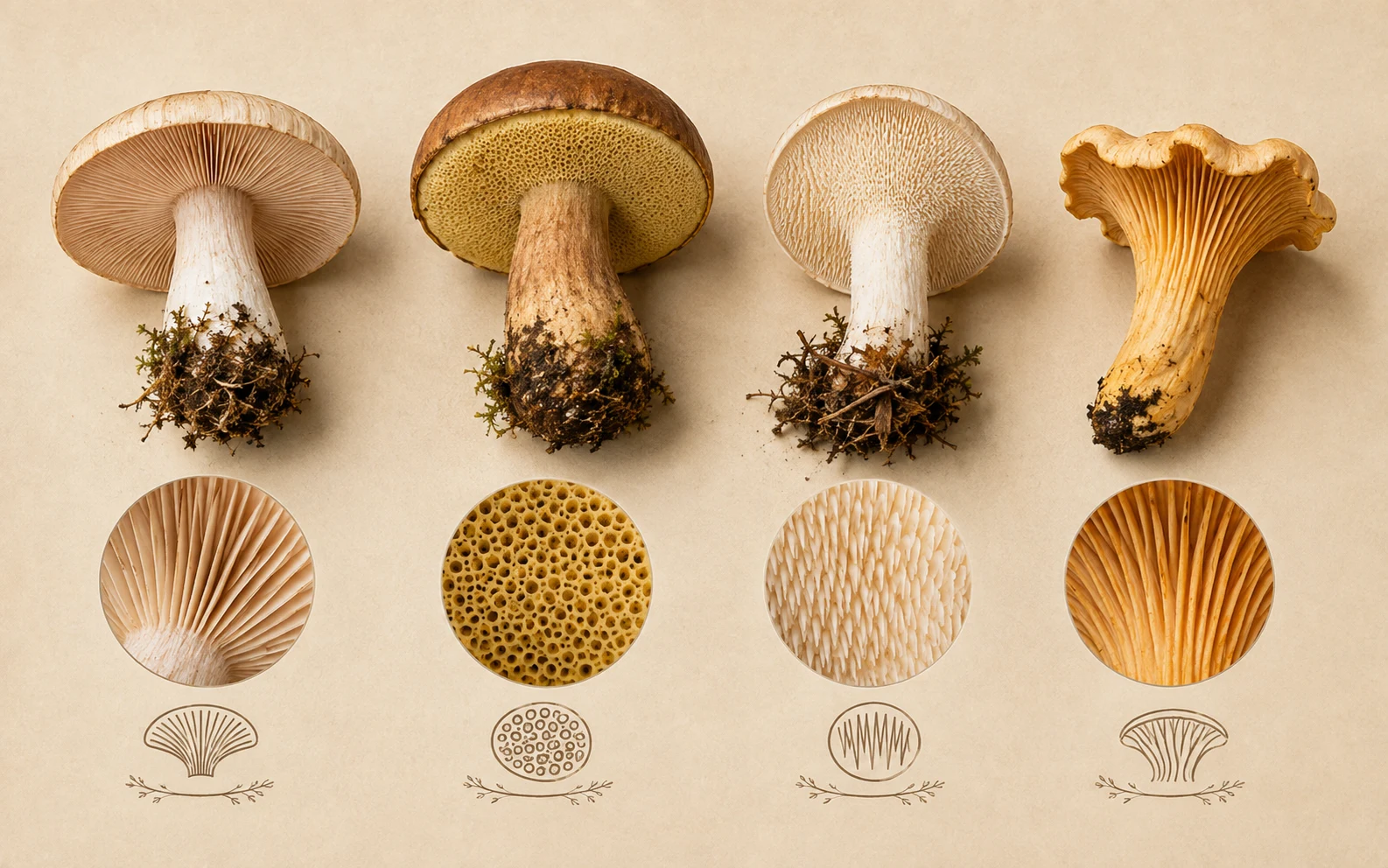
A clear underside photograph can provide information that is completely missing from a top-down image.
Examine the stem and base
Stem characteristics can help separate mushrooms with otherwise similar caps.
Look for rings, scales, fibers, color changes, swelling, tapering and other surface details. Pay particular attention to the very bottom of the stem.
Some important features occur at or below ground level, so a mushroom photographed after the base has been broken off may be much harder to identify.
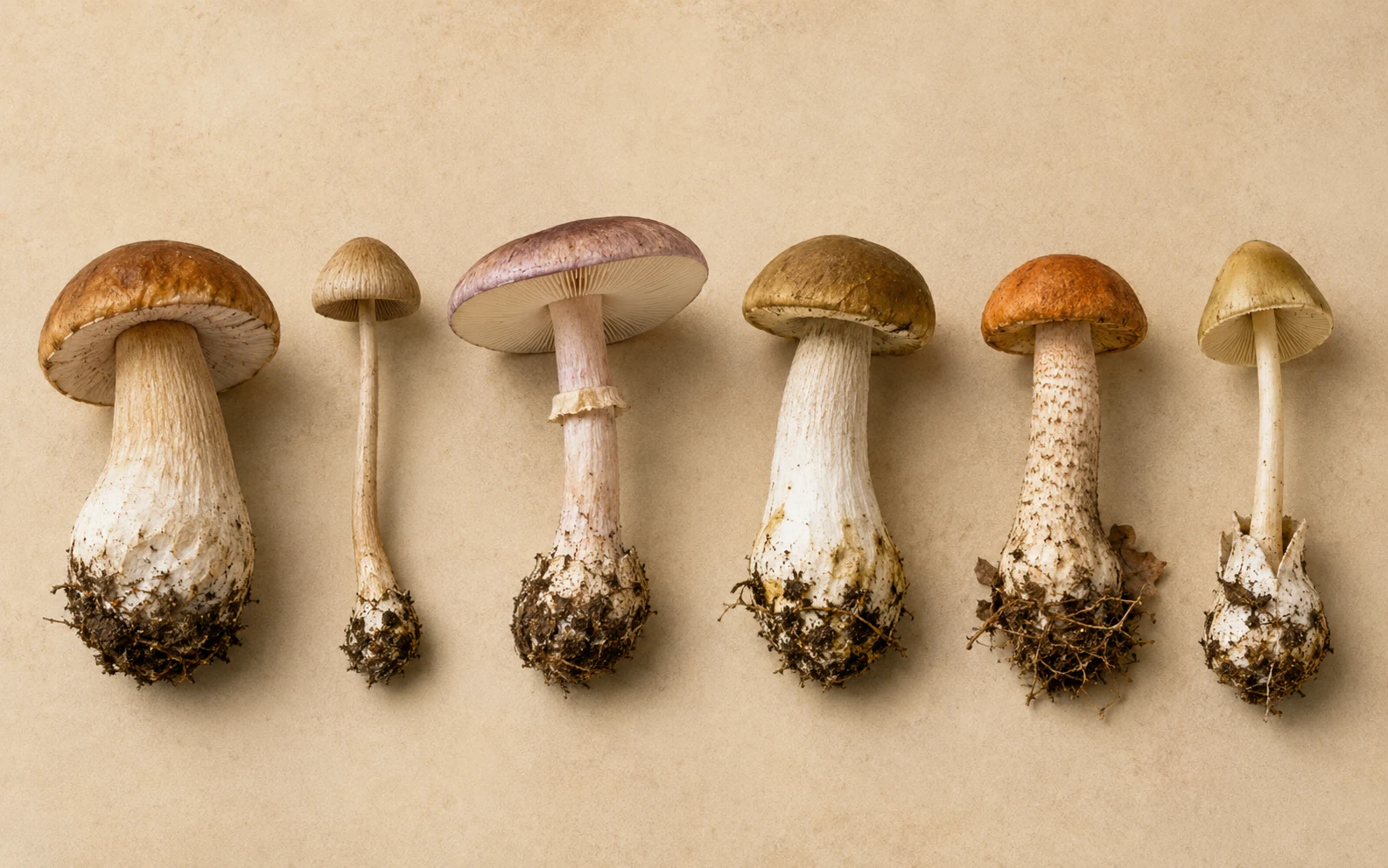
Color, texture and changes after handling
Color can be useful, but lighting, moisture and age may change how a mushroom appears.
Some mushrooms also change color when cut, bruised or damaged. These reactions can provide additional information, although they should never be used as a stand-alone test of safety.
Surface texture may be smooth, velvety, sticky, powdery, fibrous, scaly or cracked.
Habitat is an important clue
Mushrooms are closely connected to their environment. Some grow from soil, some from dead wood, and others are associated with particular trees or plant communities.
Record whether the mushroom is growing in forest, grassland, garden soil, mulch, decaying logs, stumps or living wood.
Geographic location and season can also help narrow possible identifications.
How to photograph a mushroom for identification
A useful mushroom photo set should show more than the cap. When possible, photograph:
- the mushroom in its natural habitat
- the top of the cap
- the underside of the cap
- the complete stem
- the base of the stem
- nearby mushrooms at different stages of growth
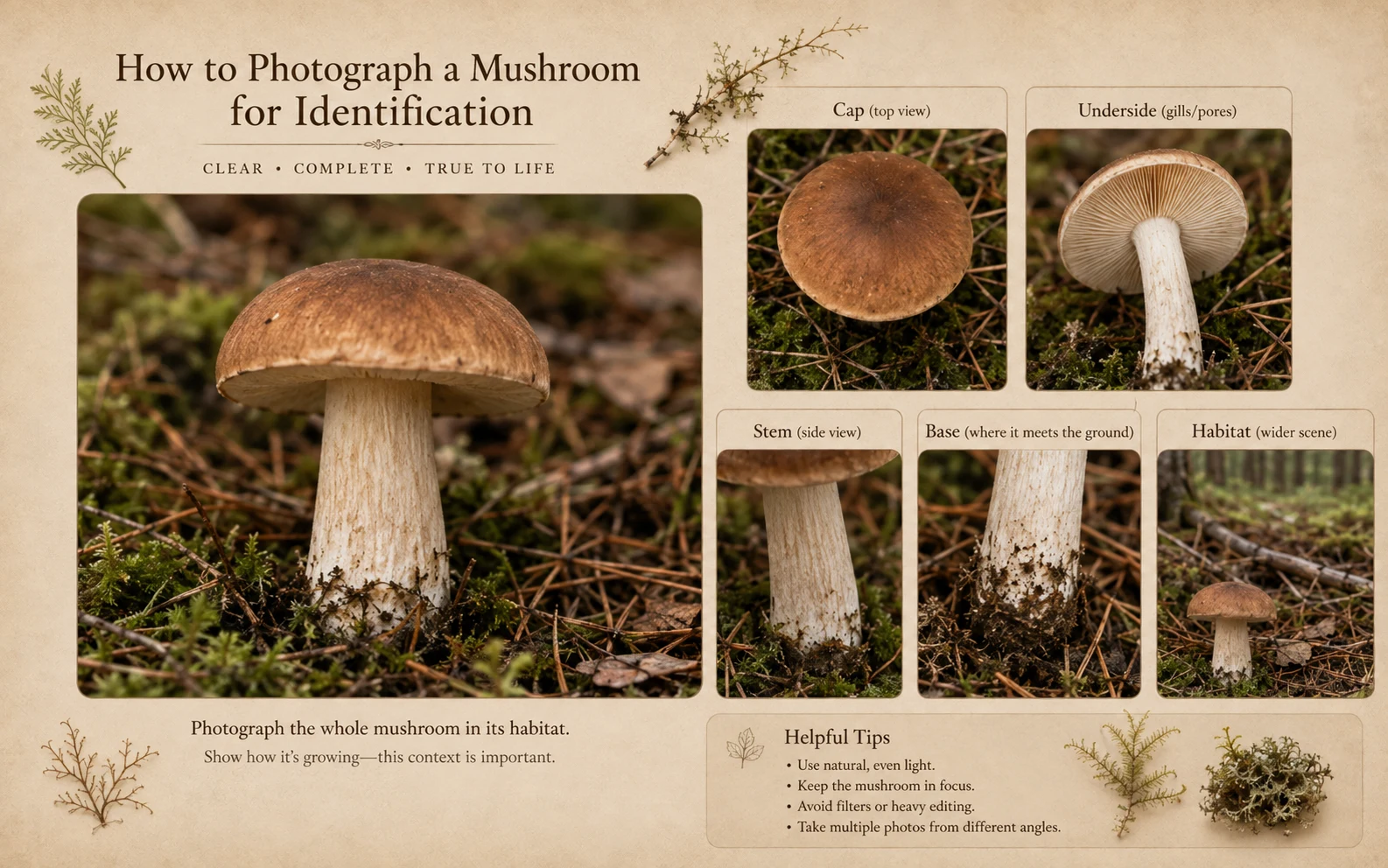
A photo showing the mushroom beside leaves, grass or another familiar object can help communicate its size, while a habitat image shows where it is growing.
What is a spore print?
A spore print shows the color of spores released from a mature mushroom. Spore color can be useful when comparing groups that otherwise look similar.
A spore print does not by itself prove a mushroom's identity or edibility. It is simply one additional identification feature.
Why can mushrooms be difficult to identify?
Mushroom appearance can change dramatically with age, moisture and weather. Young specimens may look very different from mature ones.
Some species are separated by subtle characteristics, and closely related mushrooms may look almost identical in ordinary photographs.
In difficult cases, microscopic features, chemical reactions or expert examination may be needed for a confident identification.
Mushroom identification and safety
Never eat a wild mushroom based only on an image, an automated identification result, an online article, a color test or a single visible characteristic.
Some poisonous mushrooms closely resemble edible species, and dangerous mistakes can occur even when a mushroom looks familiar.
If identification is being used to decide whether a mushroom is safe to eat, confirm it with a qualified local expert or an authoritative mycological resource appropriate to your region.
If poisoning is suspected, contact local emergency or poison control services promptly rather than relying on online identification.
Mushroom identification FAQ
What features are most useful for identifying mushrooms?
Cap shape, underside structure, stem, base, surface texture, growth pattern and habitat are all useful. Several characteristics should be compared together.
Are gills important for identification?
Yes. Gills can provide useful clues through their color, spacing and attachment to the stem. Some mushrooms have pores, teeth or ridges instead of gills.
Can you identify a mushroom from the cap alone?
Sometimes a cap suggests a group, but cap appearance alone is usually not enough for a careful identification. The underside, stem, base and habitat may be essential.
Can an app tell whether a mushroom is edible?
An automated identification should not be used as proof that a wild mushroom is safe to eat. Edibility decisions require reliable confirmation from an appropriate expert or authoritative source.
Why should I photograph the base of the stem?
Important structures can occur at the base, including swelling or surrounding tissue. If the base is missing, useful identification information may be lost.
Does a spore print identify a mushroom?
Spore color can narrow the possibilities, but a spore print is only one feature and does not identify a mushroom by itself.