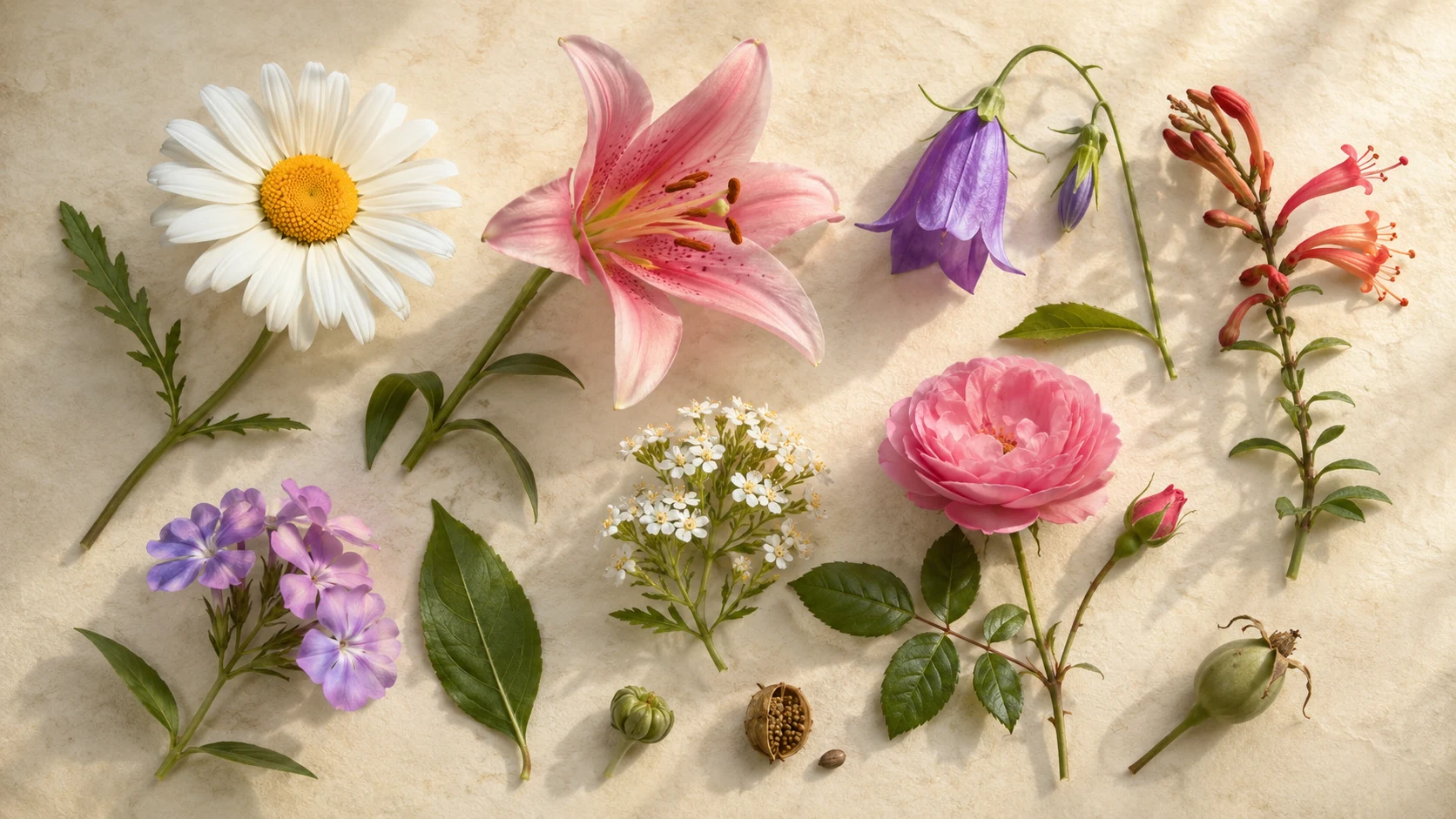
What is flower identification?
Flower identification is the process of determining the identity of a flowering plant by examining the structure of its flowers together with leaves, stems, growth habit, habitat and other characteristics.
Flowers can provide especially useful identification clues because their shape and reproductive structures are often more distinctive than color alone.
Many unrelated species produce flowers of the same color. Shape, symmetry, petal number, arrangement and the rest of the plant often provide stronger clues.
How to identify a flower
Begin by looking at the entire flowering plant before focusing on a single blossom. Then examine the flower closely and compare several characteristics together.
Flower shape
Look for flat, bell-shaped, tubular, trumpet-shaped, star-shaped or other distinctive forms.
Petals
Count visible petals or lobes and examine their size, shape and arrangement.
Symmetry
Notice whether the flower is radially symmetrical or has a distinct upper and lower side.
Flower arrangement
Determine whether flowers are solitary or grouped in clusters, spikes, heads or other arrangements.
Leaves & stems
Leaf shape, arrangement and stem characteristics help distinguish similar flowers.
Habitat
Geographic location, season and growing environment can narrow down possible species.
Look closely at flower shape
The overall shape of a blossom can provide an immediate clue. Some flowers open broadly and flat, while others form bells, tubes, funnels, trumpets or narrow structures.
Shape is especially helpful when combined with symmetry, petal number and the position of the reproductive parts.
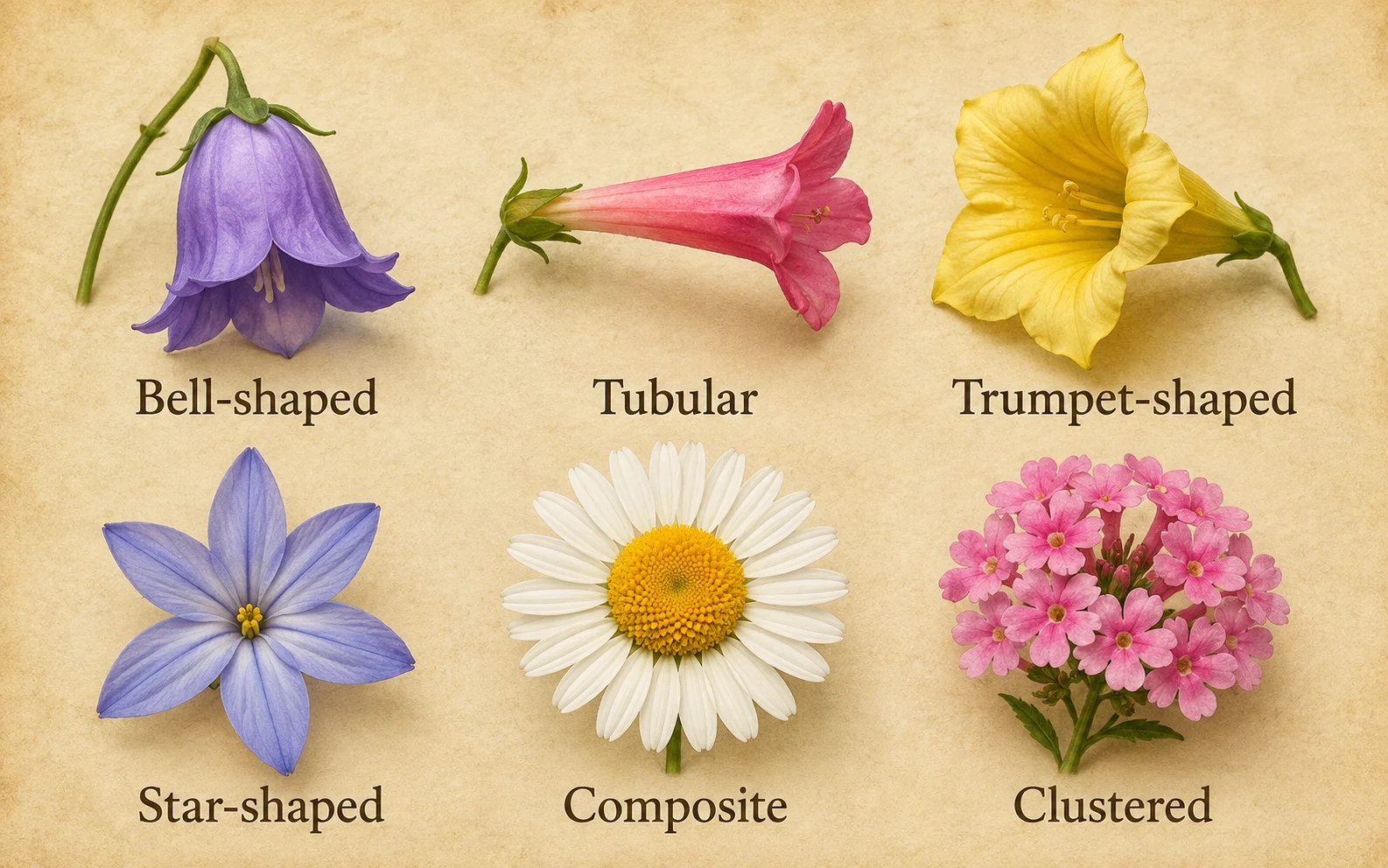
Bell-shaped, tubular, trumpet-shaped, composite and other flower forms can help narrow an identification.
Count petals and examine symmetry
The number and arrangement of petals — or petal-like parts — can be useful when comparing flowering plants.
Some flowers have a simple radial pattern that looks similar from several directions. Others are bilaterally symmetrical, with a clear top, bottom and sides.
In some flowers, what looks like one blossom is actually a group of many small flowers packed together. Sunflowers and daisies are familiar examples of this kind of composite flower head.
How are the flowers arranged?
A plant may produce one flower at a time or many flowers arranged together in a characteristic pattern.
Useful arrangements include solitary flowers, clusters, spikes, racemes, umbels, heads and branched flower groups. You do not always need to know the botanical name of the arrangement — simply noticing the pattern can be useful.
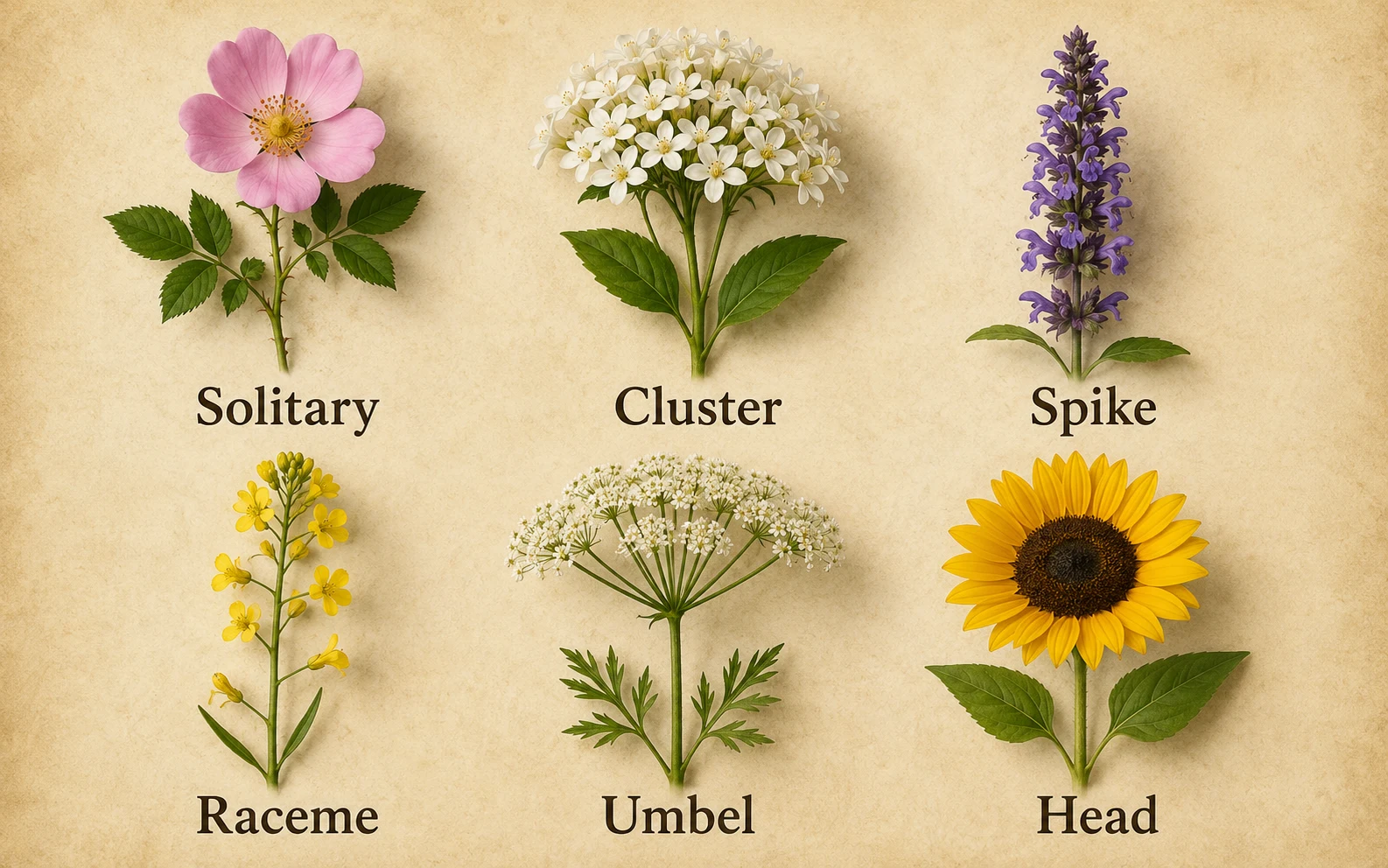
The way multiple flowers are grouped on a stem can be as useful as the appearance of an individual blossom.
How useful is flower color?
Color is one of the easiest features to notice, but it should rarely be used alone for identification.
Many unrelated species share similar colors, and flowers of the same species can sometimes vary in shade. Cultivated varieties may show even greater color variation.
Use color as one clue among several, together with shape, structure, leaves, stems and habitat.
Check the leaves and stems
Flowers may attract the most attention, but the rest of the plant often provides essential confirmation.
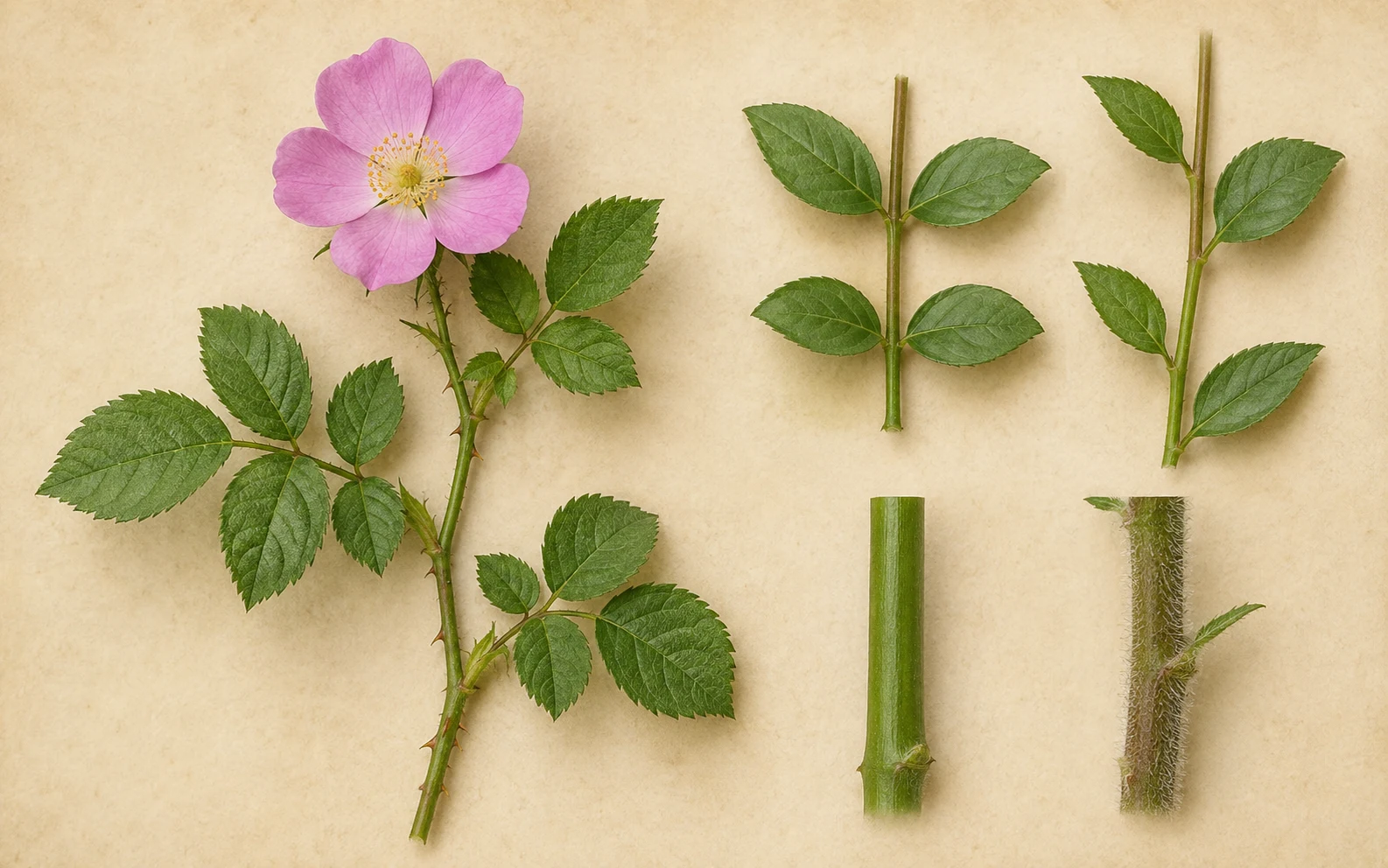
Examine whether leaves are opposite, alternate or whorled. Look at leaf shape, margins, texture and whether the leaves are simple or divided.
Stems may be round, square, hairy, smooth, hollow, succulent or woody. Some plants have thorns, spines or distinctive surface textures.
Scientific flower identification without a photo
A flower can also be identified through a scientific or botanical approach without relying on image recognition. Instead, you compare observable characteristics of the flower and the rest of the plant.
Useful features include flower shape, symmetry, petal or lobe number, flower arrangement, leaf shape and arrangement, stem characteristics, growth habit, flowering season and habitat.
Character-based identification is useful when no good photograph is available, and it can also help confirm a photo-based suggestion by comparing the plant's actual botanical features.
Identifying flowers from photos
A clear flower photograph can provide useful information, but one close-up blossom may not show enough of the plant to distinguish similar species.
When possible, take several photographs:
- the whole flowering plant
- a close-up from the front of the flower
- a side view showing the flower shape
- the way flowers are arranged on the stem
- leaves and how they attach to the stem
- fruit or seed structures if present
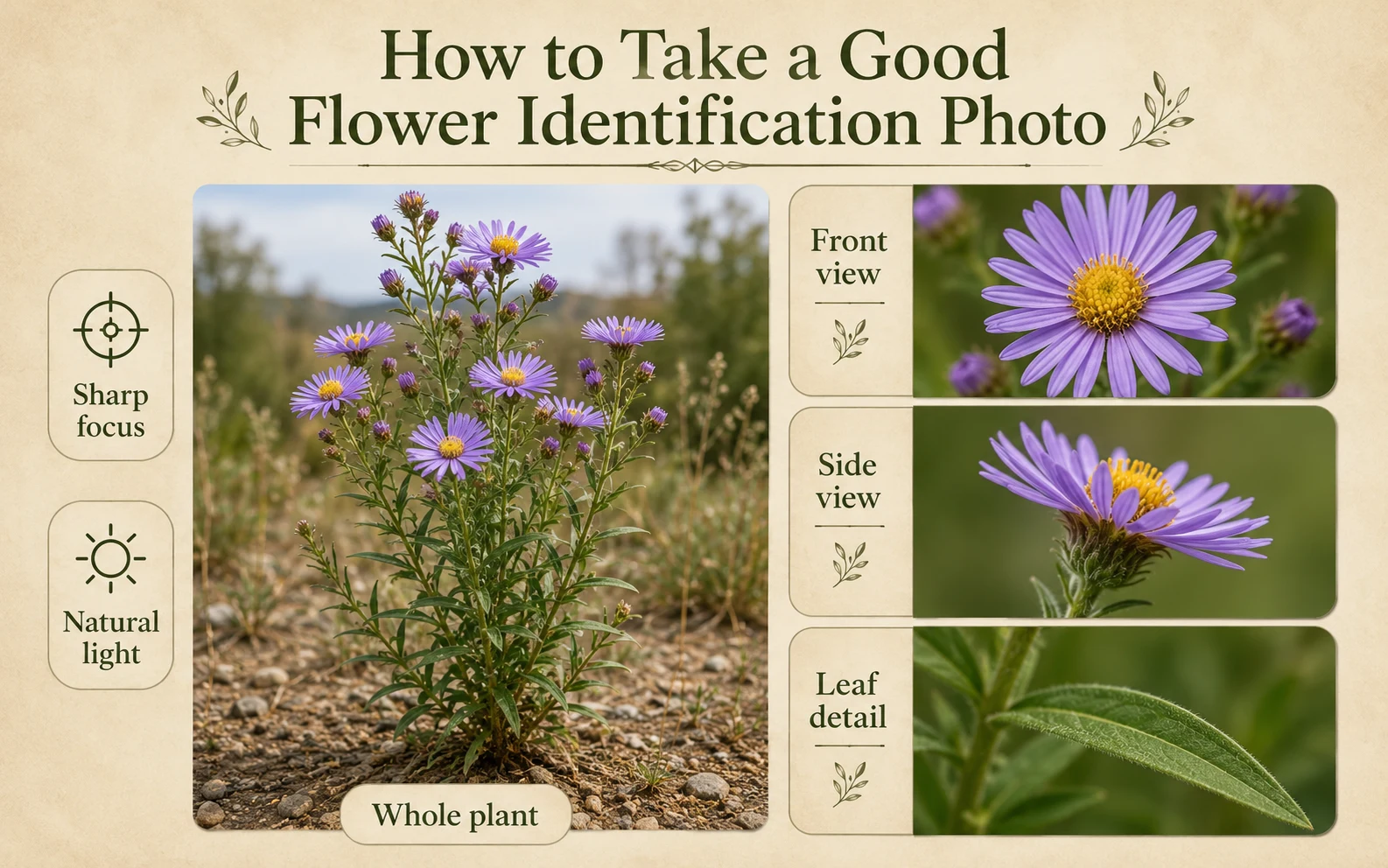
A close-up reveals petal and flower structure, while a wider photograph shows leaf arrangement, growth habit and how the flowers are grouped.
Have a flower you want to identify?
Use NatureIn to identify flowering plants from photos and explore information about the species you discover.
Identify with NatureInWildflower identification
Habitat becomes particularly valuable when identifying wildflowers. A flower growing naturally in a wet meadow may belong to a very different group from a similar-looking flower growing in dry woodland or alpine habitat.
Consider geographic location, elevation, soil moisture, surrounding vegetation and the time of year when the plant is flowering.
Avoid picking or damaging unfamiliar wildflowers, especially when you do not know whether a species is rare or protected.
Identifying garden flowers
Garden plants can sometimes be more difficult to identify because horticultural varieties may differ greatly in color, flower size and form from wild populations.
Double flowers, unusual colors and compact growth habits may be the result of selective breeding. When identifying a garden flower, it can be useful to first determine the species or genus and then consider whether it may be a cultivated variety.
Why do some flowers look so similar?
Different plants can evolve similar-looking flowers, while closely related species may differ only in small details.
Important differences may include flower size, hairs, reproductive structures, leaf arrangement, stem shape, fruit, habitat or flowering season.
For difficult identifications, compare multiple characteristics instead of relying on one attractive photograph.
Flower identification and safety
Do not eat a flower or other plant part based only on a photograph or automated identification result.
Some ornamental and wild flowers contain toxic or irritating compounds, and edible-looking plants may have dangerous look-alikes.
For food, medical, poisoning or other safety-related decisions, confirm an identification with an appropriate expert or authoritative botanical source.
Flower identification FAQ
What is the easiest way to identify a flower?
Start with flower shape, symmetry and arrangement, then compare the leaves, stems, growth habit and geographic location. Several clues together are more useful than flower color alone.
Can you identify a flower by color?
Color can help narrow possibilities, but many unrelated species share the same colors. Shape, petal arrangement, leaves and flower structure usually provide stronger evidence.
Does petal number help identify flowers?
It can. Petal or lobe number is useful for many plants, especially when combined with symmetry and flower shape. Some apparent flowers, however, are actually clusters of many tiny flowers.
Can an app identify a flower from a picture?
Flower identification apps can analyze photographs and suggest possible species. Clear images showing both the flower and other parts of the plant can provide more useful information.
Should I photograph the leaves too?
Yes. Leaves and their arrangement on the stem can help separate flowers that look very similar.
Why can garden flowers be hard to identify?
Cultivated varieties can have different colors, flower sizes, petal counts and growth forms from wild plants of the same species.