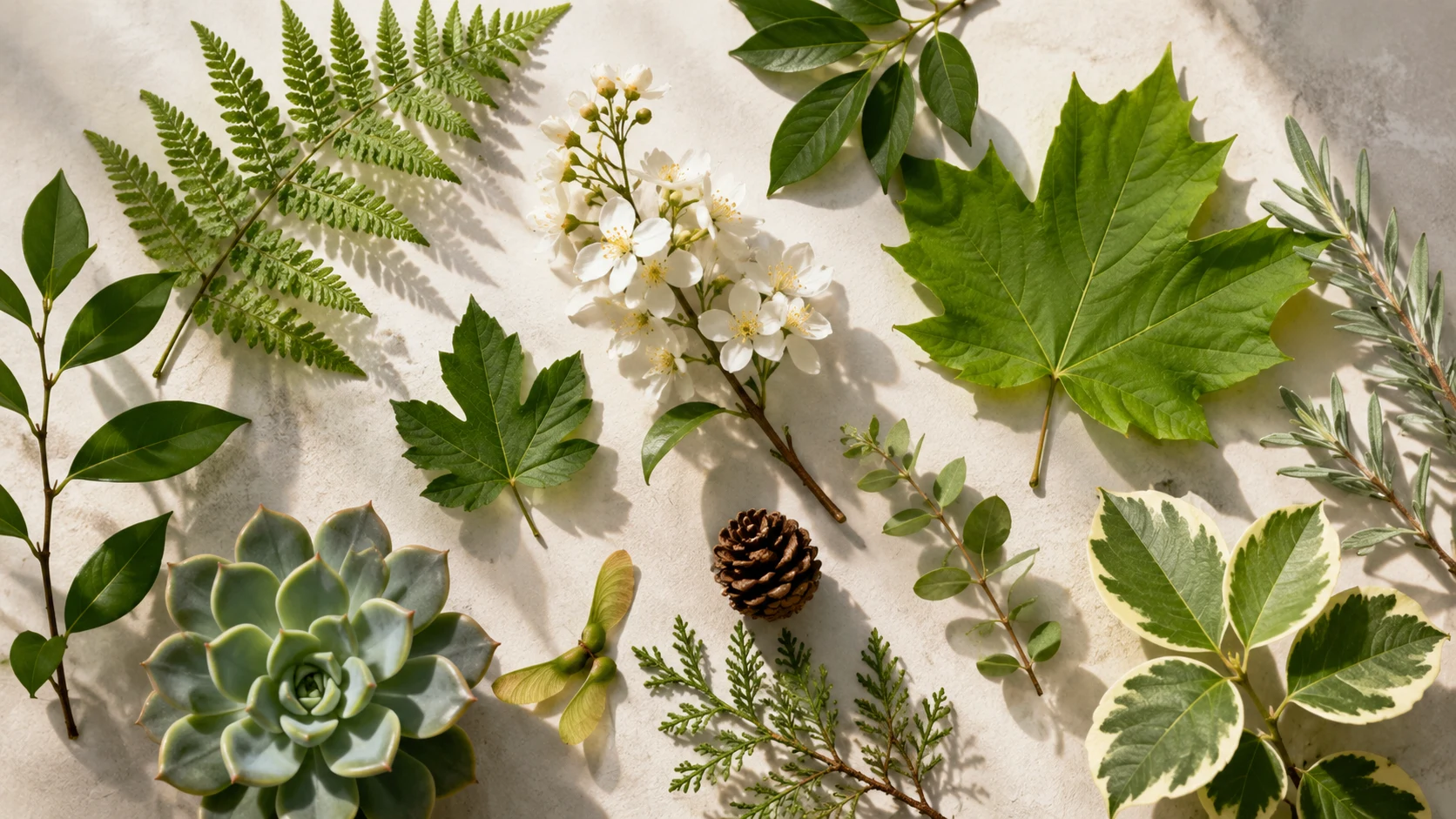
What is plant identification?
Plant identification is the process of determining the identity of a plant by studying its visible characteristics and comparing them with known species.
Botanists traditionally identify plants using features such as leaf arrangement, flower structure, fruit, stems, bark and other botanical characteristics.
Today, photographs and image recognition technology can also help narrow down possible species quickly.
A plant may sometimes be recognizable from one distinctive feature, but the most reliable identifications usually come from examining several characteristics together.
How to identify a plant
When you encounter an unknown plant, start by looking at the entire plant before focusing on individual details.
Overall shape
Is it a tree, shrub, vine, grass, succulent, fern or herbaceous plant?
Leaves
Examine shape, margins, veins, arrangement, texture and color.
Flowers
Look at color, symmetry, petal number, shape and flower arrangement.
Stem & bark
Bark texture and stem shape can provide important clues.
Fruit & seeds
Berries, nuts, pods, cones and seeds can distinguish similar species.
Habitat
Geographic location and growing environment can greatly narrow the possibilities.
Look closely at the leaves
Leaves are among the most useful features for plant identification because they are present for much of the growing season.
Important leaf characteristics include:
- leaf shape
- leaf size
- leaf margin or edge
- leaf arrangement on the stem
- leaf veins
- leaf texture
- leaf color
- hairs, wax or spines
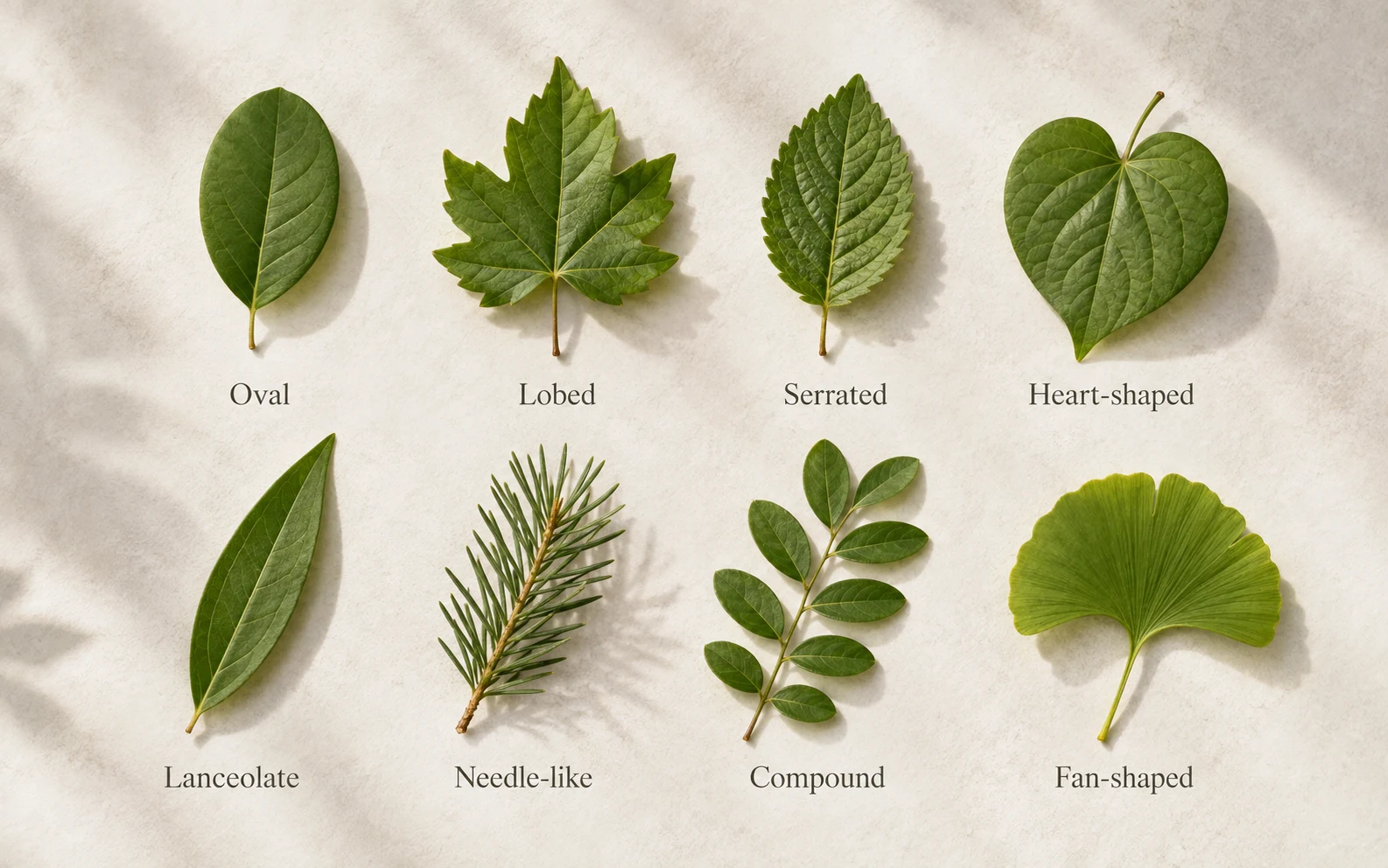
Leaf shape, edge, venation and arrangement can all provide useful identification clues.
Leaves may be simple or compound, and their edges may be smooth, serrated, lobed or toothed. These differences are especially useful when distinguishing closely related plants.
Flowers can reveal important clues
Flowers often contain some of the most useful characteristics for identifying flowering plants.
Look at flower color, size, symmetry, number of petals, overall shape and the way flowers are arranged on the plant.
Some plants produce one large flower, while others produce clusters, spikes, umbels or many tiny flowers grouped together.
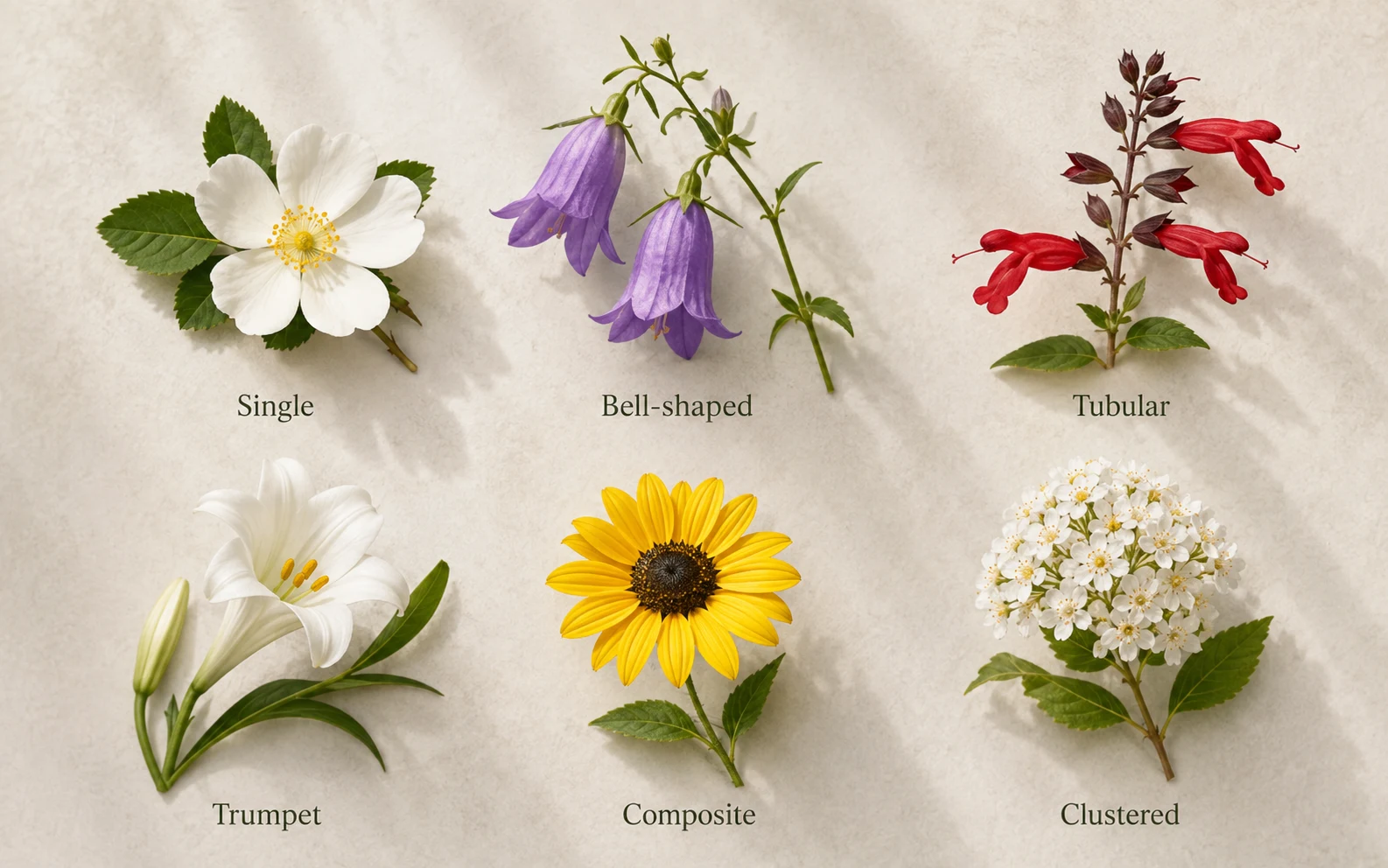
Many unrelated plants produce flowers of the same color. Shape, petal arrangement and flower structure are usually more useful.
Examine stems and bark
Stems and bark are particularly useful when identifying trees and shrubs.
Bark may be smooth, peeling, deeply furrowed, scaly, papery or patterned with distinctive markings.
On smaller plants, examine whether the stem is round, square, hairy, smooth, hollow, woody or succulent.
Look for fruit, berries and seeds
Fruits and seeds can make an otherwise difficult plant much easier to identify.
Look at their shape, color, size, texture and arrangement. Trees may produce berries, nuts, pods, winged seeds, acorns or cones.
Many plant families have characteristic fruit structures that help distinguish them from similar-looking plants.
Scientific plant identification without a photo
Plant identification can also be done without starting from a photograph. Scientific or botanical identification uses observable plant characteristics to narrow down possible species step by step.
These characteristics can include leaf shape and arrangement, flower structure, stems, bark, buds, fruit, seeds, growth habit, habitat and geographic location.
Character-based identification is useful when a photo is unavailable or unclear, and it can provide an independent way to check a result suggested from an image.
Identifying plants from a photo
Photo-based plant identification makes it possible to investigate an unfamiliar plant within seconds.
Images can contain useful visual information about leaf shape, flower structure, texture, color and the overall appearance of the plant. But image quality matters.
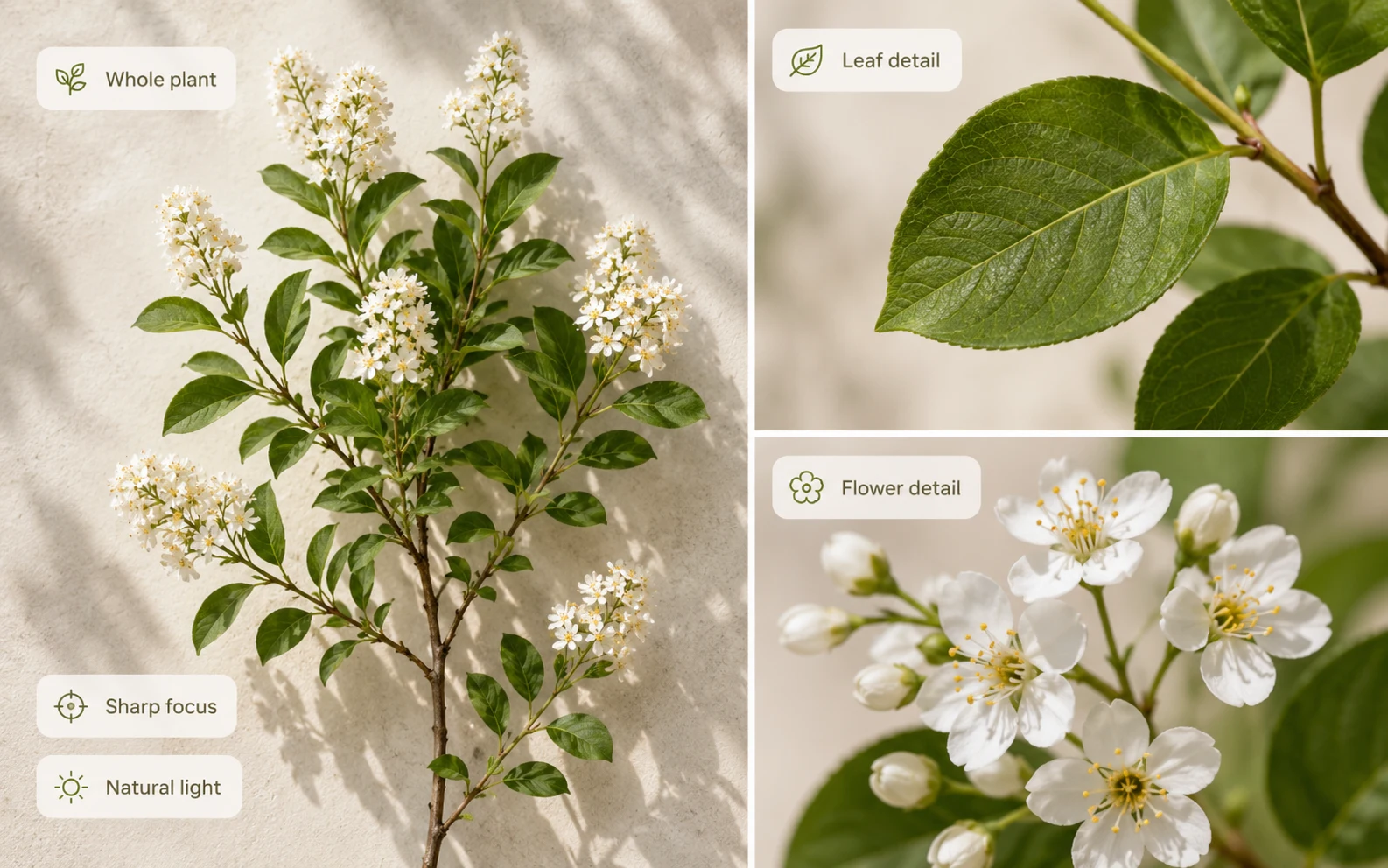
How to take a good identification photo
When possible, photograph:
- the entire plant
- a close-up of the leaves
- the front of a flower
- the side of a flower or flower cluster
- fruit or seeds
- bark or stems for trees and shrubs
Use natural light, keep the important parts in focus and avoid taking the photo from so far away that botanical details become difficult to see.
Have a plant you want to identify?
Use NatureIn to identify plants from photos and explore information about the plants you discover.
Identify with NatureInWhy can plant identification be difficult?
There are hundreds of thousands of known plant species, and many can look remarkably similar.
A young plant can look different from a mature specimen. Flowers and fruits may be visible for only part of the year, and environmental conditions can affect a plant's size and appearance.
Closely related species may differ only in small characteristics such as flower structures, leaf hairs, seed shape or the arrangement of leaves.
For this reason, image-based identification is best treated as a starting point that can be compared with additional characteristics.
Tree identification
Trees can often be identified by combining leaves with bark, buds, branches, fruit, cones and overall growth habit.
During winter, deciduous trees lose their leaves, making bark, buds and twig arrangement especially valuable.
Evergreen trees can often be distinguished using needles, scales, cones, leaf arrangement and branch structure.
Identifying wild plants
Habitat provides an additional clue when identifying plants that grow naturally.
Soil, elevation, moisture, climate and geographic range can help distinguish species that otherwise look very similar.
When photographing wild plants, avoid damaging or removing them, particularly if you do not know whether the species is rare or protected.
Plant identification and safety
Correct identification is especially important when dealing with plants that may be poisonous, irritating, medicinal or edible.
Do not eat a wild plant or mushroom based only on a photograph or automated identification result.
Similar-looking species can have very different properties, including potentially dangerous ones.
For food, medical, agricultural or safety-related decisions, confirm an identification with an appropriate expert or authoritative botanical source.
Plant identification FAQ
How can I identify an unknown plant?
Start with a clear photograph and examine its leaves, flowers, stems, fruit, bark and overall growth form. Geographic location and habitat can provide additional clues.
What part of a plant is best for identification?
Flowers often provide excellent identification characteristics, while leaves are usually available for longer periods. Ideally, use several plant parts together.
Can an app identify a plant from a picture?
Plant identification apps can analyze photographs and suggest possible identities. Clear images showing distinctive plant features generally provide better results.
Can you identify a plant from one leaf?
Sometimes. Certain plants have highly distinctive leaves, but many species have similar leaf shapes. Flowers, bark, fruit or location may be necessary for a more confident identification.
Can you identify plants without flowers?
Yes. Leaves, stems, bark, buds, fruit, seeds, growth habit and habitat can all be used when flowers are absent.
Should I use more than one photo?
When possible, yes. A whole-plant image combined with close-ups of leaves, flowers, bark or fruit can provide much more information than one photograph alone.